
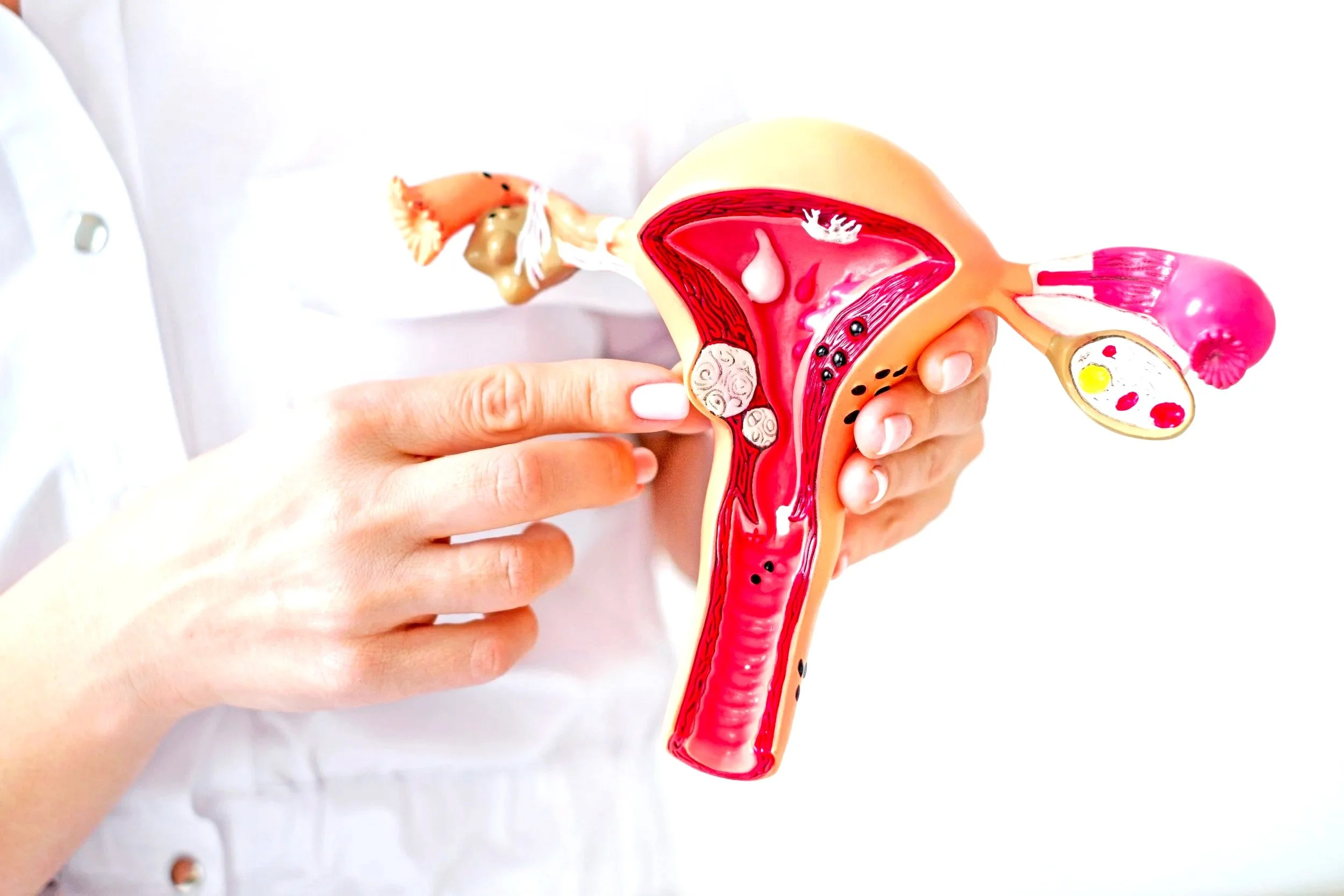
Fibroids.
Fibroids are very common non-cancerous growths of the uterus. They vary in size, number, and location and can be completely asymptomatic or significantly impact quality of life. While the exact cause is not fully understood, fibroids are influenced by hormones (oestrogen and progesterone) and often run in families.
Symptoms
Many women have no symptoms, but fibroids can cause:
Heavy or prolonged menstrual bleeding
Flooding or passage of large clots
Pelvic pressure or bloating
Painful periods
Back or leg pain
Frequent urination or constipation (from pressure on the bladder or bowel)
Pain with intercourse
Fertility or pregnancy-related issues (depending on location)
Fibroid Classification
Fibroids are described based on where they sit in the uterus. They are almost always benign - but very rarely, a cancer called leiomyosarcoma can occur; this is extremely uncommon.
Submucosal
Grow just under the endometrium and protrude into the uterine cavity
Most associated with heavy bleeding, infertility, and miscarriage
Best treated with hysteroscopic myomectomy when appropriate
Intramural
Grow within the muscular wall of the uterus
Can cause heavy bleeding, pressure symptoms, or pain
Treatment depends on size, symptoms, and fertility goals
Subserosal
Grow on the outer surface of the uterus
Typically cause bulk-related symptoms (pressure, bloating, urinary issues)
Less commonly associated with heavy bleeding
Investigations
Diagnosis usually involves:
Pelvic ultrasound - first-line imaging to assess size, number, and location
MRI scan - used in selected cases to clarify anatomy or plan surgery
Blood tests - including full blood count and ferritin to check for anaemia
Hysteroscopy - to directly view the cavity for suspected submucosal fibroids
Management Options
Treatment depends on fibroid size, symptoms, future fertility plans, and overall health. Some fibroids may not require any treatment.
Non-Hormonal Treatments
Tranexamic acid to reduce heavy bleeding
NSAIDs to reduce bleeding and control pain
Hormonal Treatments
Combined oral contraceptive pill
Progesterone-only methods
Mirena® (levonorgestrel IUS)
GnRH agonists/antagonists (short-term use to shrink fibroids or manage symptoms)
Uterine Artery Embolisation (UAE)
A minimally invasive radiology procedure that blocks the blood supply to fibroids, causing them to shrink. Best suited to women who wish to avoid surgery and are not planning future pregnancy.
Surgical Management
Myomectomy
Surgical removal of fibroids while preserving the uterus.
Suitable for women wishing to retain fertility or avoid hysterectomy.
Hysteroscopic myomectomy – for submucosal fibroids inside the uterine cavity
Laparoscopic (keyhole) myomectomy – for appropriately sized and located fibroids
Open myomectomy – for very large or numerous fibroids
Hysterectomy
Complete removal of the uterus and the definitive treatment for fibroids.
Laparoscopic hysterectomy – associated with faster recovery
Open hysterectomy – for very large uteri or complex anatomy
Morcellation
For large fibroids removed laparoscopically, tissue may need to be broken down to extract it through small incisions.
This is performed within a contained bag to improve safety and prevent tissue spread.
When should I seek help?
You should seek medical advice if you experience:
Heavy or prolonged periods
Bleeding that affects daily activities
Pelvic pain, pressure, or bloating
Difficulty conceiving
Rapidly enlarging abdomen or new symptoms
Any bleeding after menopause
How we can help
We provide comprehensive assessment and personalised management for women with fibroids, ranging from medical treatments to advanced surgical care.
Anna has additional surgical training in advanced laparoscopic (keyhole) gynaecological surgery, including complex myomectomy and laparoscopic hysterectomy, offering patients minimally invasive options with quicker recovery, less pain, and smaller scars.
We work with you to understand your symptoms, discuss the full range of evidence-based options, and develop a treatment plan aligned with your goals and fertility wishes.
Helpful links
-
Jean Hailes Uterine Fibroids
WEBSITE
-
The Royal Women's Hospital Fibroid Fact Sheet
PATIENT INFORMATION
-
RANZCOG Hysteroscopy
PATIENT INFORMATION
-
The Royal Women's Hospital Myomectomy
PATIENT INFORMATION
-
RANZCOG Hysterectomy
PATIENT INFORMATION